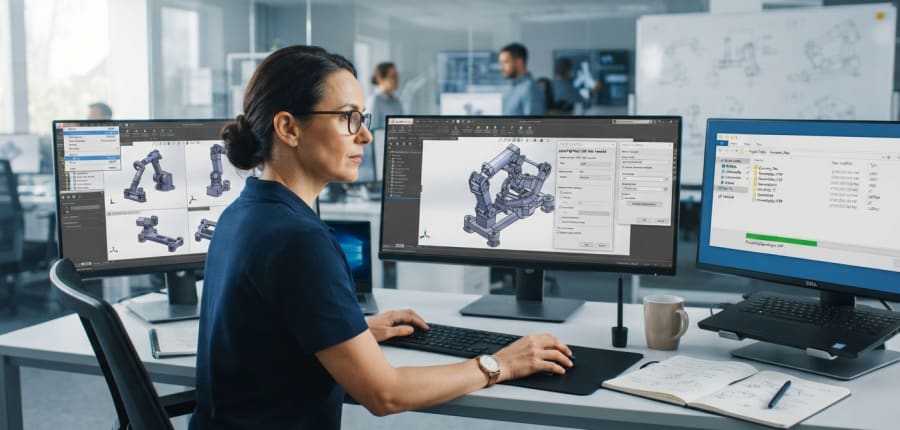
Modern engineering projects often involve teams using different computer-aided design systems. Because each platform may rely on its own file formats, moving design information between applications can become a challenging part of the workflow. A reliable cad format converter helps address this problem by enabling engineering data to move between supported formats while reducing unnecessary manual work.
When CAD files need to be transferred between design, manufacturing, simulation, or inspection environments, compatibility is an important consideration. A suitable cad format converter can simplify these exchanges and help organizations maintain a more consistent digital workflow. Instead of recreating models from scratch, engineers can convert existing data and continue working with it in another compatible environment.
Why CAD Format Conversion Matters
CAD models contain valuable information used throughout the product development process. Geometry, assemblies, surfaces, and other design elements may need to be accessed by several applications. If a receiving system cannot directly read the original file type, conversion becomes necessary.
Without an effective conversion process, teams may encounter delays, duplicated work, or problems interpreting transferred geometry. These issues can become especially significant when projects involve multiple suppliers, engineering departments, or software platforms.
A dependable conversion solution can help make data exchange more practical. It can support workflows where designers create models in one application while manufacturers, engineers, or analysts use different software for subsequent stages.
Supporting More Efficient Engineering Workflows
The value of CAD conversion extends beyond simply changing a file extension. A proper conversion process should focus on preserving useful engineering information as accurately as possible. This is particularly important when models are transferred between systems that use different approaches to representing geometry.
For engineering organizations, an efficient converter can contribute to smoother collaboration. Teams can spend less time dealing with file compatibility and more time concentrating on design development, analysis, manufacturing preparation, and other important tasks.
Conversion can also be useful when organizations maintain older engineering archives. Existing models may have been created using software that is no longer part of the company's current workflow. Converting those files into suitable formats can make historical design information easier to access and reuse.
What Should You Consider When Choosing a Converter?
Several factors can influence whether a CAD conversion tool fits a particular engineering environment. Supported input and output formats are an obvious starting point, but they are not the only consideration.
Users should also consider how the software handles complex models, assemblies, geometric accuracy, and large datasets. Processing performance can matter when organizations regularly work with substantial engineering files. Automation capabilities may also be valuable for companies that need to process many files as part of a repeatable workflow.
Another consideration is integration. Engineering teams may benefit from conversion technology that can be incorporated into existing software applications or development environments rather than requiring every conversion to be performed manually.
Improving Data Exchange Across Teams
Reliable CAD data exchange can support collaboration throughout the product lifecycle. Designers, engineers, manufacturers, suppliers, and other stakeholders may all need access to the same product information, even when they use different software systems.
By making file conversion more predictable, organizations can reduce some of the friction associated with heterogeneous CAD environments. This can help create a more connected workflow in which engineering information remains useful as it moves from one stage of development to another.
Ultimately, CAD format conversion is an important part of modern engineering data management. The right solution can help organizations work with diverse CAD environments, improve accessibility of existing models, and support more efficient collaboration. For teams handling frequent or complex data exchanges, choosing a capable conversion technology can be an important step toward maintaining a dependable engineering workflow. How a 3D CAD Kernel Supports Complex Engineering Models
#CAD #3DModeling